

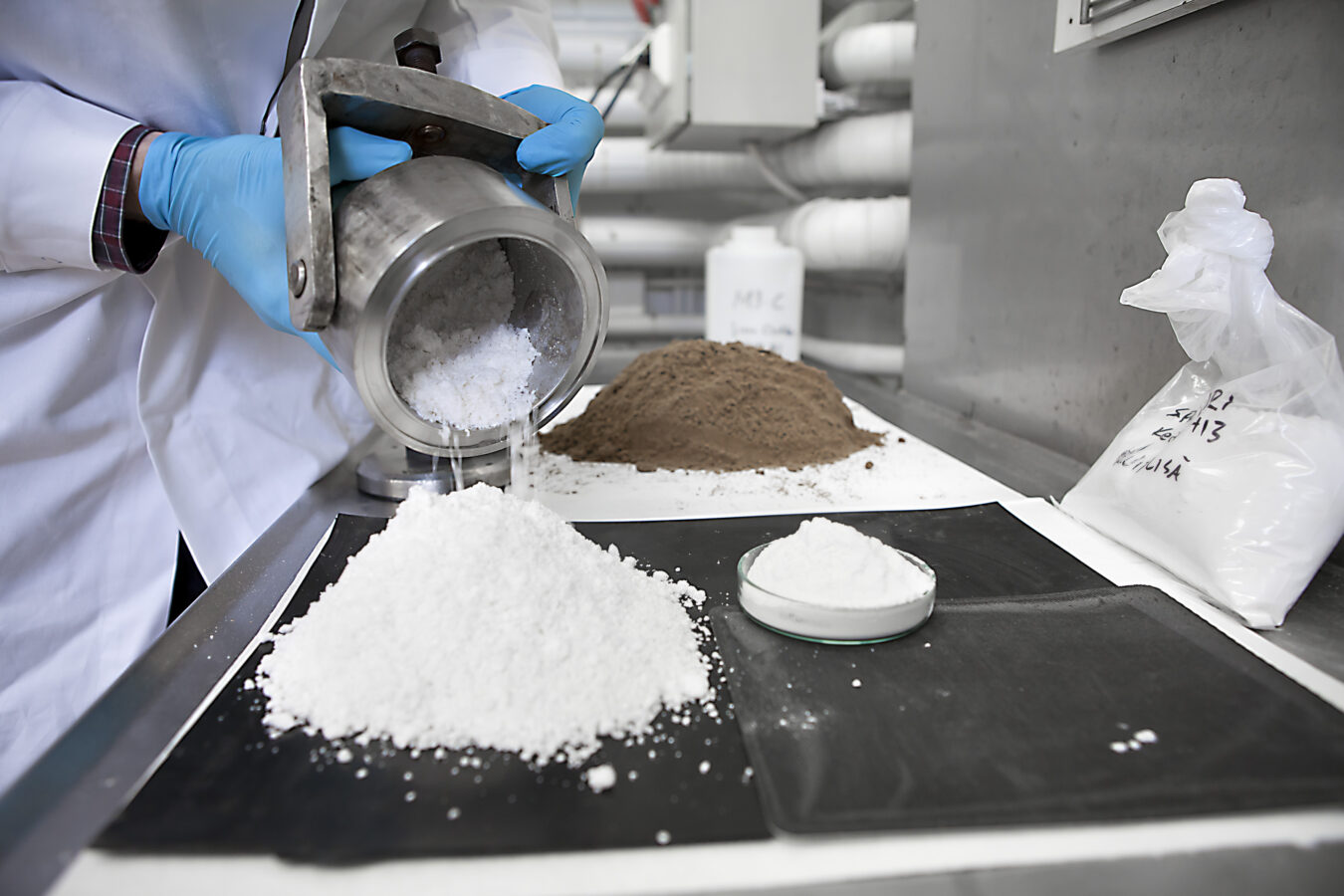

Microcrystalline cellulose, or MCC, has long been known as an important raw material in pharmaceuticals, food and cosmetics. However, its widespread use has been limited by the costly and environmentally damaging manufacturing process. Now, a new process developed at Aalto University, AaltoCell™, opens up a new era for the production and use of MCC.
Microcrystalline cellulose has traditionally been produced from dissolving cellulose by a concentrated hydrochloric acid treatment. Although the end product obtained in this way is of high quality, the manufacturing process has been found to be industrially inefficient and environmentally damaging. The high consumption of chemicals, the small scale of production and the high cost of raw materials have limited the production capacity of MCC, and at the same time prevented its wider use.
AaltoCell™ transforms microcrystalline cellulose production
The AaltoCell™ process developed at Aalto University offers solutions to improve the efficiency of MCC production. The process uses pulp and dilute sulphuric acid instead of dissolving pulp and concentrated hydrochloric acid. The new process operates at high consistency, making production much more efficient.
The new approach makes it possible to produce MCC on an industrial scale with a significantly lower carbon footprint.
The commercialisation of the method has been developed by an Aalto University spin-off company, Nordic Bioproducts Group Oy. The company has set up a pilot plant in Lappeenranta and production has already started.
Initial results have shown that MCC produced by the new process also fulfils the requirements of traditional applications, such as in the pharmaceutical and food industries. The process also produces a pure sugar stream that can be used as a raw material for the production of new products using synthetic biology.
Promising openings for new applications
The new MCC production process and the use of pulp as a raw material offer a cost-effective opportunity to develop new cellulose-based products that can have a significant global impact.
For example, Nordic Bioproducts Group is the first in the world to patent lignin-based MCC and its use in poultry feed.
Trials in poultry have shown significant improvements in animal welfare and meat quality. The use of around 5-7 kg of lignin-containing MCC per tonne of feed has also improved feed utilisation, meaning that poultry grow more with the same or even less feed. We expect this to become a significant new business opportunity when the AaltoCell™ process is integrated into the pulp mill’s production and product portfolio.
New products with the new process
AaltoCell™ has also shown potential in textile fibre production. Textile fibres made from wood-based and recycled fibres have properties between cotton and viscose. There is a demand for such fibres.
By combining this approach with existing viscose production processes, competitive production costs can be achieved. At the same time, it eliminates the harmful carbon disulphide used in current viscose production.
In factory-scale trials, MCC has successfully reduced the need for plastic in food packaging by more than 50% by replacing polypropylene. At the same time, the carbon footprint of the final product has been reduced by around 75%. The challenge with the above application has been that the final product does not meet EU recycling requirements for plastics due to the large amount of fibre in the final product.
Currently, it seems that the first market for such a product is in Asian countries where plastic recycling is not yet regulated and where bioplastics and fibres are preferred as raw materials. The end product will be fully biodegradable disposable containers, which can also be used to reduce the generation of microplastics.
As can be seen from the examples above, the potential for using virgin MCC is almost unlimited. I am convinced that the AaltoCell™ process will become part of every pulp mill’s production in some way. However, the end product is not MCC, but an intermediate for new end products in the bioproduct industry.
Blog author: Olli Dahl
Professor of Environmental Engineering for Process Industries, Aalto University
olli.dahl(at)aalto.fi
Originally published as a blog on Biotalous.fi: https://www.biotalous.fi/mikrokiteisen-selluloosan-monet-mahdollisuudet/.