
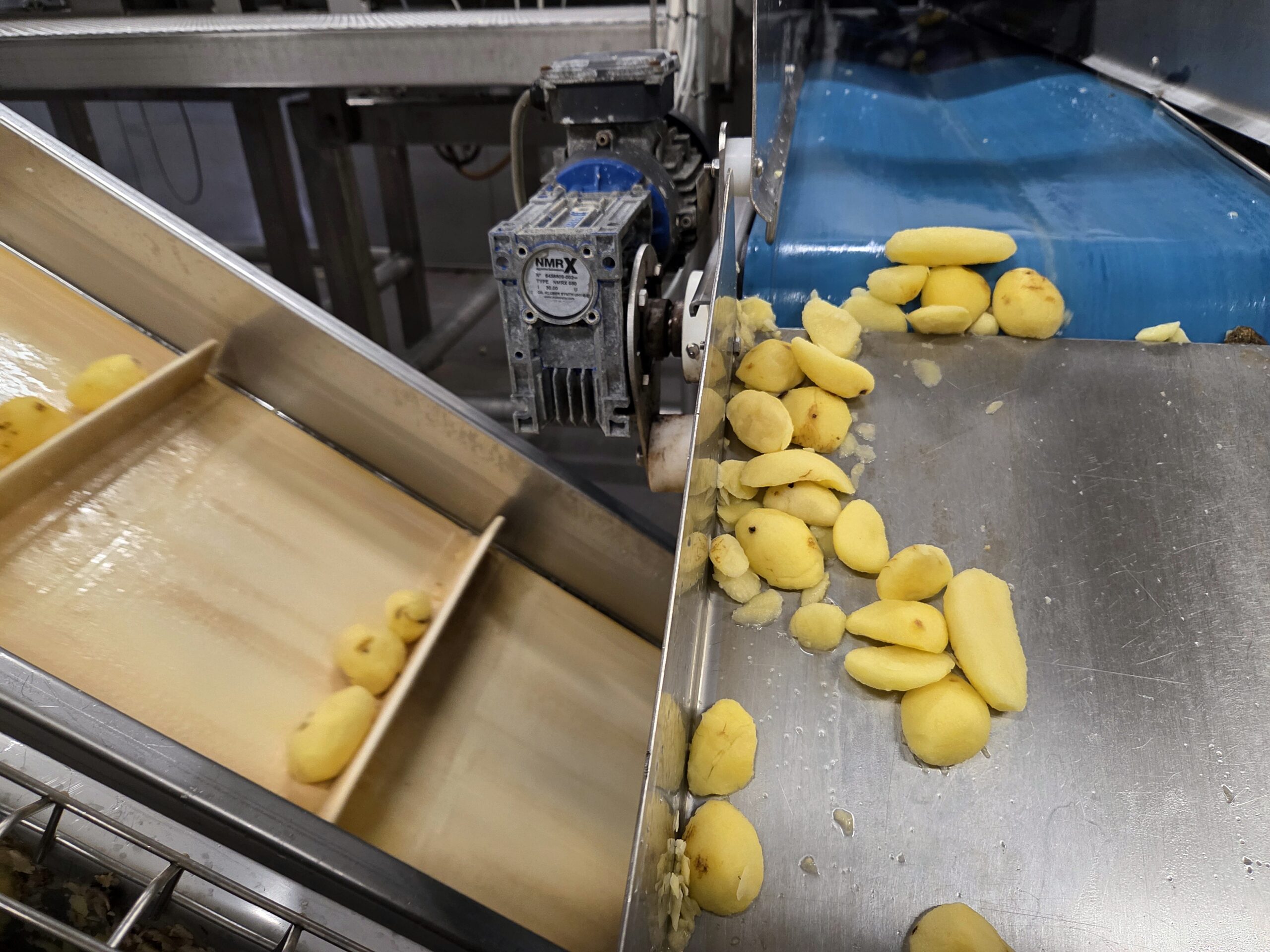

Up to one-third of all table potatoes in Finland are grown in Kristinestad and the surrounding area. However, a very large portion of the potato harvest goes to waste. About one-fifth of the potatoes are unsuitable for consumption, for example, because of their size. An even larger portion of the potato mass is lost when potatoes are industrially peeled for stores and restaurants. No matter where in Finland a hungry diner happens to be, it’s highly likely that their potato peels are still in Kristinestad.
Every year, 35 million kilograms of local potatoes are brought through the gates of Öströmin Perunatuota in Kristinestad. At the factory, the potatoes are washed and inspected, after which large machines peel them. However, during peeling and other processing steps, nearly half of the potatoes are discarded because the final products must look flawless, uniform in quality, and uniform in size. Out of 35 million kilograms of potatoes, only 20 million kilograms of marketable final product are produced.
The potato peels and other discarded parts aren’t wasted, though: they’re fed to pigs or other large animals as animal feed. But surely something even more valuable could be made from them to sell.
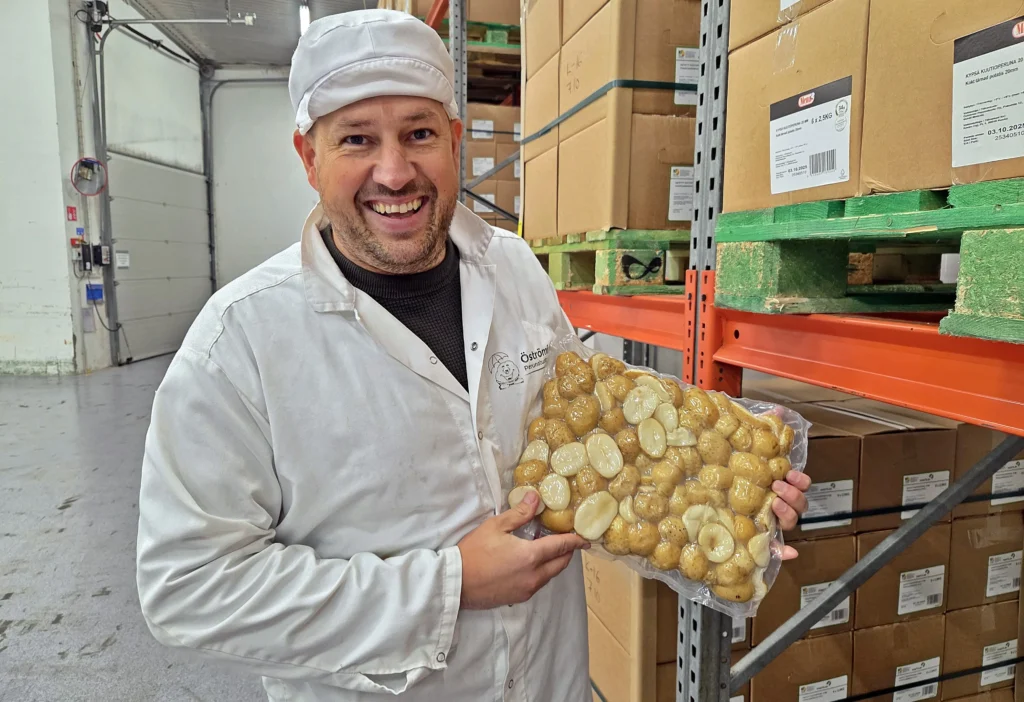
“Developing the utilisation of sidestreams is only of interest if it can be turned into a profitable business. We haven’t reached that point yet,” says Sami Öström, CEO of Öström Perunatuote.
KristinaEco seeks new opportunities for utilising potatoes
The KristinaEco Living Lab in Kristinestad is exploring new ways to better utilise byproducts from potato production. These new opportunities in potato production will be showcased during the Bio2Reg study tour to other European regions in August 2026.
CEO Sami Öström sees opportunities to generate greater added value from potatoes. One possibility would be the production of biogas suitable for energy generation—either directly or by first feeding potato peels to livestock and then producing biogas from the animal manure.
The potato’s high nutritional content could offer even greater commercial potential, as even the discarded portion contains about 1.6–1.9 grams of protein per 100 grams. The amino acid composition of potato protein is excellent and can be efficiently utilised by humans. Potato skins are also a healthy source of carbohydrates, fibre, vitamins, and minerals, even though most of the potato is water.
However, utilising potato production by-products requires partners.
“Our main focus is on developing our core products, as that is the most important aspect of our business, and solutions for utilising by-products already exist. But we’re very open to finding solutions with partners to make even better use of these by-products,” says Öström.
Larvae provide valuable feed
KristinaEco has been looking for companies that could help make better use of potato by-products. One of the companies they found is Jepro, a feed producer.
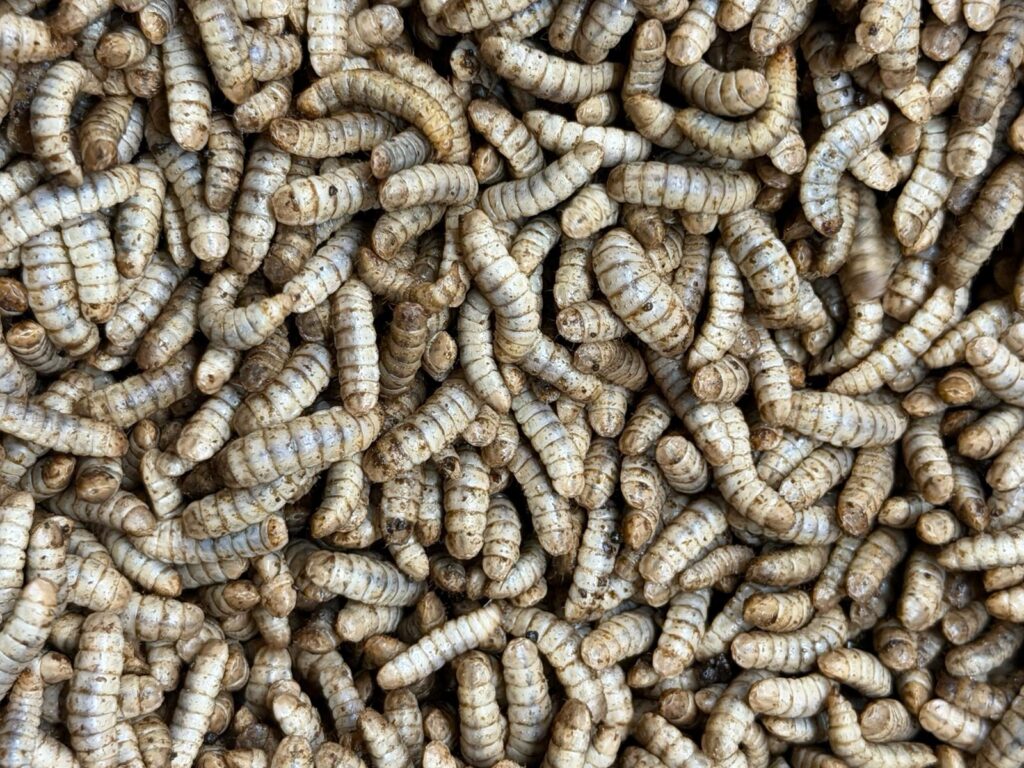
On the Ostrobothnian coast, 150 north of Kristinestad in Nykarleby, Jepro’s factory hall is bustling with activity. Boxes are teeming with a huge number of larvae, each about one centimetre long. Robots care for them under computer-controlled conditions and provide them with precisely measured portions of feed. The larvae voraciously eat everything they’re given, as they’re growing at a rapid pace. By the time they are just 14 days old, the larvae are large enough to be used as high-quality animal feed. In the larvae, potato peels, second-grade potatoes, and plant waste have largely been converted into protein and fat.
“We realised early on that this is particularly well-suited as pet food,” says Pontus Sundvik, one of Jepro’s owners.
Around the world, black soldier fly larvae are specifically raised for animal feed. During their first week of life, they grow very quickly. Then a robot separates the larvae from the growing medium and cleans them. Afterward, the larvae are dried—for example, in an oven or a dryer—resulting in feed with a long shelf life. At Jepro, the dried larvae are ground into meal. High-quality oil can also be extracted from the dried larvae. Both the meal and the oil are nutrient-rich and environmentally friendly compared to, for example, soy-based protein-rich feeds.
Potato byproducts are suitable for the larvae
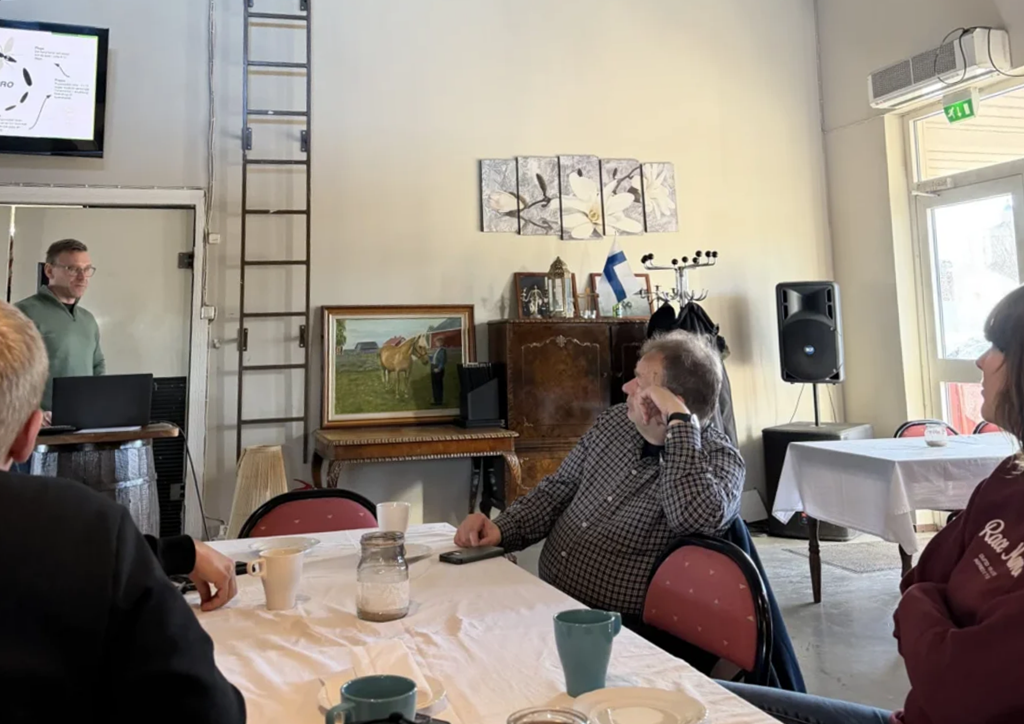
KristinaEco organised a meeting in Kristinestad between Jepro and local potato farmers. It turned out that potato producers are clearly interested in supplying their second-grade potatoes as feed for the larvae.
Sundvik explained that potatoes are the most important raw material in their production and that the larvae’s annual potato requirement could be as high as 10,000 metric tons, which is a significant amount.
“We are very interested in collaborating with potato growers in Kristinestad and the surrounding areas,” Sundvik said at the meeting.
The potato growers present also expressed interest in the deliveries.
“So you want whole, washed potatoes from us,” asked Christoffer Berglund.
“Yes, that’s best for us,” said Sundvik.
Ronny Hoxell, foreman at Krs Potato Products, asked what the company was willing to pay for the potatoes. It is, of course, important that the collaboration be profitable.
“We’ll pay a reasonable price, which is intended to cover transportation costs and also generate a small profit,” says Sundvik.
Some potatoes have already been delivered from Kristinestad to Jepro since early this year. However, the plan is for deliveries to begin on a larger scale starting in the summer of 2026.
Authors: Visa Noronen and Janne Smeds