



As Kristinestad prepares for major investments in data centres, energy infrastructure and other industrial activities, the town is also confronting a challenge with growing global relevance: how can waste heat be transformed from an overlooked by-product into a valuable resource?
This question lies at the heart of the work being carried out by Naganandhini Somalinga Mohanlal, a master’s student at the University of Vaasa. Through a collaboration between the university and Business Kristinestad with KristinaEco, she is exploring practical and economically viable ways to utilise excess heat in the town of around 6,000 residents. The project will form the basis of her master’s thesis and may also lead to future doctoral research.
Originally from Tamil Nadu in southern India, Naganandhini brings an unusually broad academic background to the project. Before beginning her studies in Sustainable and Autonomous Systems at the University of Vaasa, she also studied food production and has lived and studied in both Sweden and the United Kingdom. This combination of expertise has proven particularly valuable when examining how waste heat might support food production and other local industries.
Her interest in the field grew out of studies in energy harvesting, which focuses on capturing and making use of energy that would otherwise be lost.
“You can look around us and see so much energy lying around unused,” she says.
Low-temperature heat limits the options
One of the biggest challenges in waste heat utilisation is that the available heat is often relatively low-grade. Industrial processes may operate at temperatures of several hundred degrees Celsius, but the heat released as waste is typically much cooler.
Naganandhini explains that a process using temperatures of around 200°C may only produce waste heat at approximately 45°C. While this heat still contains value, it is not hot enough for many industrial applications without additional heating. Raising the temperature further requires extra energy, which can reduce both efficiency and economic viability.
As a result, her research focuses on identifying applications that can use waste heat directly, without extensive upgrading.
Among the most promising opportunities are hydroponic farming – a method of growing plants without soil – and greenhouse cultivation. Both systems can benefit from moderate temperatures and could potentially make use of waste heat with relatively little additional energy input. The objective is not simply to find uses for excess heat, but to identify solutions that are economically and environmentally sustainable.
Hydroponics has emerged as a particularly promising option. Because crops are grown in nutrient-rich water within carefully controlled environments, hydroponic systems can make efficient use of steady heat sources. If waste heat temperatures closely match operational requirements, only minimal temperature management may be needed.
For a community such as Kristinestad, where industrial waste heat could become increasingly abundant, hydroponics may offer an attractive long-term solution.
Traditional soil-based greenhouse cultivation presents another opportunity. Waste heat could extend growing seasons and support local food production during Finland’s long winters. However, greenhouse operations face seasonal challenges. During summer, excess heat can become a disadvantage, requiring additional cooling or ventilation.
Any viable solution, therefore, must account for significant seasonal variations.
Distance matters
The Nordic climate presents another obstacle: distance.
In larger cities, district heating systems often provide a practical way of distributing excess heat. Kristinestad, however, is a relatively small municipality where potential users may be located some distance from future sources of waste heat.
As heat travels through pipes, some energy is inevitably lost. During cold winter conditions, water leaving a facility at 45°C may arrive several degrees cooler at its destination. These losses become an important consideration when assessing the economic feasibility of any project.
Looking Norway for ideas
To identify possible solutions, Naganandhini has studied examples from Norway, where data centres and industrial facilities reuse waste heat either for building heating or to support related industrial processes located nearby.
She has also examined examples closer to home, including waste-processing facilities where heat generated in one stage of the operation is reused in another. These examples suggest that successful systems often depend on keeping heat producers and heat users close together.
Seasons make solutions more complicated
Seasonality remains a key issue. Waste heat can be highly valuable during winter, but demand often falls sharply during summer. Rather than relying on expensive long-term heat storage systems, Naganandhini suggests that different applications could be prioritised at different times of the year.
One possibility is aquaculture. Fish farming requires carefully controlled water temperatures, and moderate waste heat could help maintain suitable conditions during warmer months when heating demand elsewhere is lower. Such an approach could provide an alternative outlet for excess heat that might otherwise go unused.
Machine learning may unlock new opportunities
One of the most innovative aspects of the project is the use of machine learning.
Naganandhini proposes developing predictive models capable of forecasting both waste heat production and utilisation patterns. By analysing operational data on an hourly basis, researchers could estimate future heat availability and determine how it could be allocated most effectively between different applications.
Such tools could support better investment decisions while helping municipalities and businesses maximise resource efficiency.
The project is done in cooperation with several partners.
“I would like to thank the University of Vaasa, Scale24 and Business Kristinestad for this opportunity,” said Naganandhini.
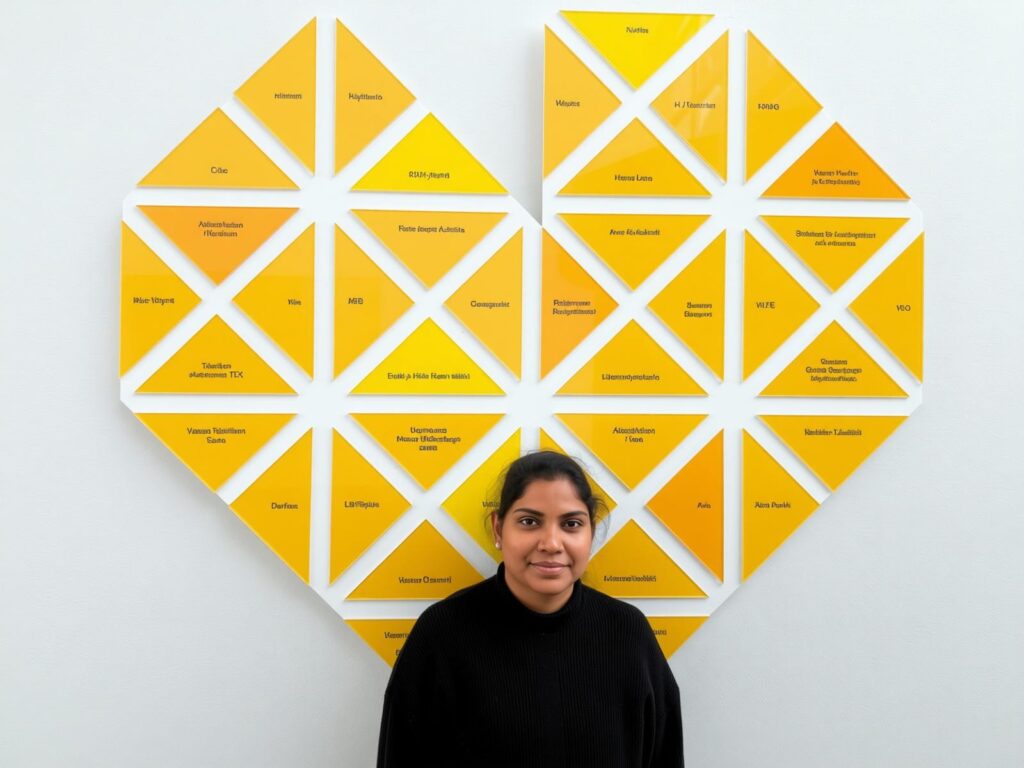
Naganandhini Somalinga Mohanlal studies at the University of Vaasa.