

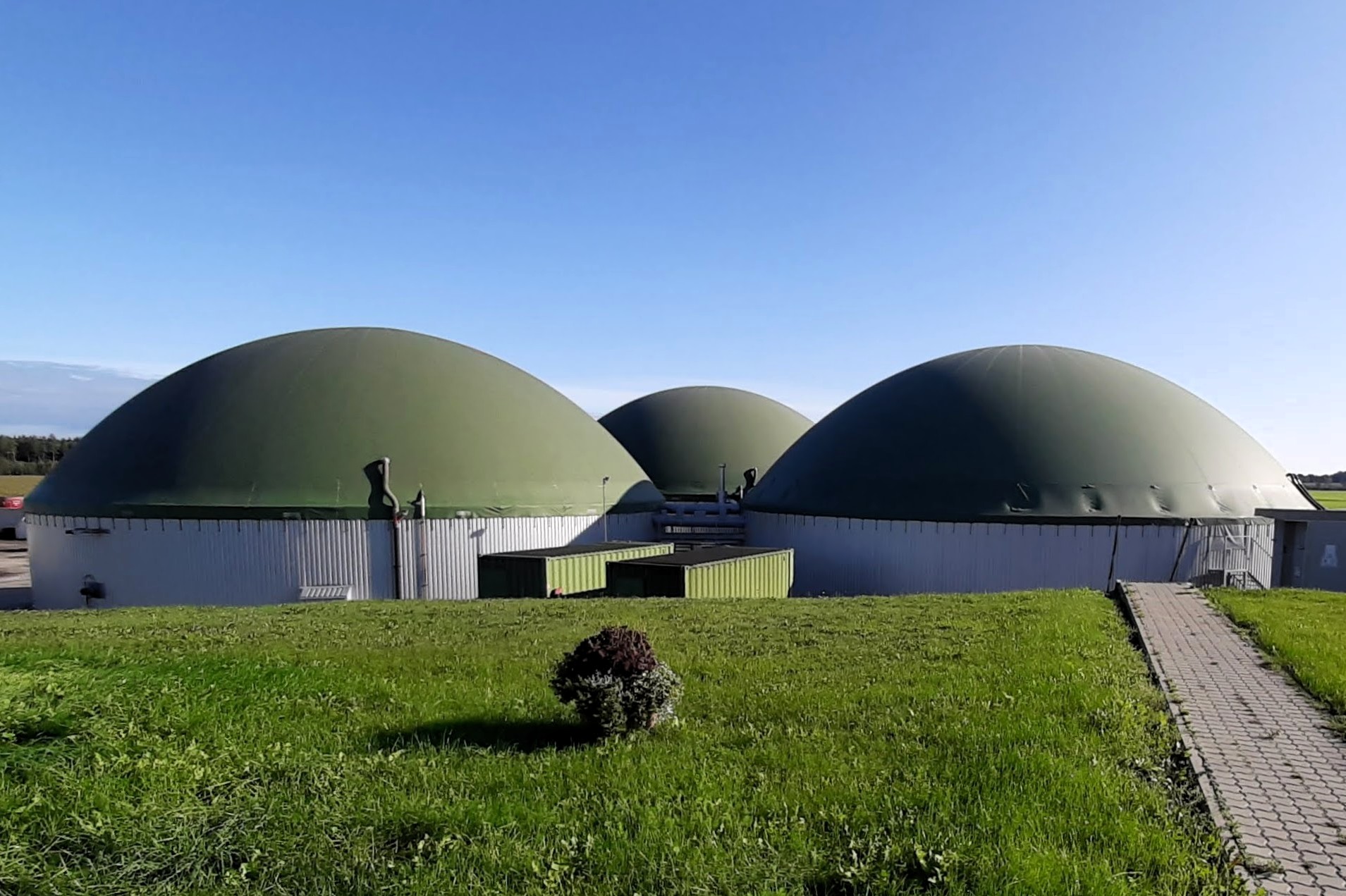

The profitability of a biogas plant depends on optimising the entire value chain, from feedstocks to end customers, said Pertti Miettunen, Managing Director of KristinaEco Living Lab, at the Bio Circular Economy Afternoon organised by Prizztech and Business Kristinestad on 5 October 2026.
The foundation of a profitable business is built on the right feedstocks. The biogas process is a sensitive biological system in which the quality, quantity and combination of feedstocks directly influence gas yields. Manure alone does not usually deliver the best possible results, although it provides important nutrients for the microorganisms involved in the digestion process. Yields can be increased significantly by combining manure with feedstocks such as food industry side streams, biowaste or other materials with a high methane potential. Fats, oils and biowaste are particularly valuable inputs from a gas production perspective.
Another critical factor is location. Logistics account for one of the largest cost components of any biogas project. Feedstocks should not be transported over long distances; instead, the plant should be situated as close as possible to the source of the biomass. This also makes it easier to utilise digestate and other by-products. In practice, the location alone can determine whether a project is commercially viable.
Many people assume that the business is centred on selling gas. In reality, revenue can be generated from several different sources. In addition to biomethane, a biogas plant produces nutrient-rich fertiliser products, carbon dioxide and, in some cases, electricity and heat. In certain projects, a substantial income stream may also come from gate fees charged for accepting waste. In this sense, a biogas plant can be viewed as much as a waste treatment facility as an energy production plant.
Understanding the market is just as important as mastering the technology. The customer base for biogas largely overlaps with that of natural gas, but biogas is generally more expensive. As a result, customers are often organisations for which emissions reductions are strategically important. According to the presentation, the most attractive growth markets currently include heavy transport and energy production, particularly for liquefied biogas. Passenger car transport, on the other hand, appears to be moving increasingly towards electrification.
A profitable project also requires careful financial planning. An industrial-scale biogas plant is a long-term infrastructure investment, and financiers pay particular attention to the predictability of cash flows. For this reason, both feedstock availability and product sales are typically secured through long-term agreements. In practice, the success of a plant depends on how accurately future revenues and costs can be forecast for years ahead.
The outlook is especially promising for biomethane. Estimates suggest that biomethane production in Finland will continue to grow, with the largest untapped potential found in agricultural feedstocks such as manure, grass silage and straw. However, profitability from these materials does not stem from gate fees but from the efficient upgrading of the gas, the effective utilisation of by-products, and the ability to sell these outputs at attractive margins.
Ultimately, the secret to a profitable biogas business does not lie in a single technology or one major investment. Successful projects combine the right feedstocks, efficient logistics, multiple revenue streams, a stable customer base and predictable cash flow. When the entire value chain is carefully planned, a biogas plant can become far more than an energy facility; it can develop into a resilient and growing business.
Read all presentations from the event here (in Finnish):
https://www.prizz.fi/kehittamisteemat/bio-ja-kiertotalous/circular-bio/biokiertotalouden-iltapaiva.html