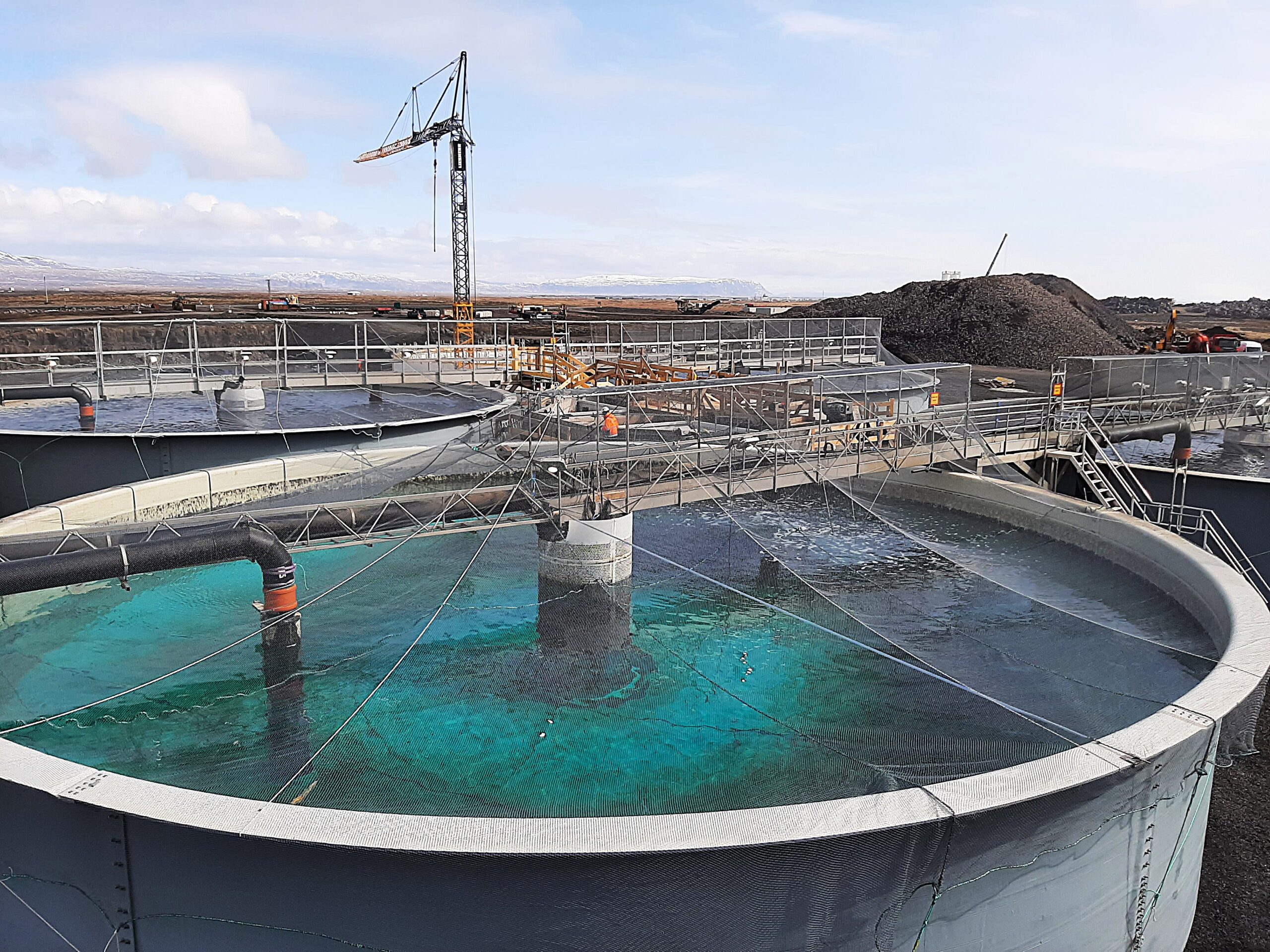

In Iceland, there is strong belief in the future of land-based salmon farming. International demand for salmon is growing rapidly, and land-based fish farms offer Iceland the opportunity to increase exports, create new jobs and diversify the economy, particularly in rural areas. However, land-based fish farming also produces significant quantities of fish sludge, the treatment of which requires new solutions.
The volume of fish sludge is growing exponentially
In 2025, land-based facilities in Iceland produced around 4,000 tonnes of salmon. Icelandic companies have plans to increase production to as much as 150,000 tonnes per year by 2031. At the same time, the volume of fish slurry will also increase considerably, as more or less same amount of slurry is produced as there are fish to be harvested.
Fish slurry consists mainly of fish excrement and feed residues. If it is not treated properly, the nutrients can end up in the environment and cause eutrophication of water bodies. Icelandic legislation therefore obliges fish farmers to treat the waste produced.
A circular economy solution combining energy and nutrient recycling
A solution to this problem is being developed as part of the Terraforming LIFE project, funded by the EU’s LIFE programme. The aim is to build a new biogas and fertiliser plant in Iceland that utilises by-products from fish farming as part of the circular economy.
At the plant, fish sludge is treated via anaerobic digestion – a biological process that takes place in oxygen-free conditions. Microbes break down the organic matter, producing biogas and nutrient-rich digestate.
The aim of the project is not only to address the growing volume of waste, but also to create new products and business opportunities. At the same time, it will help reduce greenhouse gas emissions, improve nutrient recycling and strengthen Iceland’s food security.
Organic fertiliser from fish slurry
A valuable end product of the biogas process is nutrient-rich digestate, which is used to produce organic fertiliser.
Fish slurry contains nutrients required by plants, such as nitrogen, phosphorus and potassium. Phosphorus, in particular, is a limited natural resource, and recycling it is important for future food production.
Organic fertiliser has several advantages over synthetic fertilisers. It releases nutrients more slowly, increases the amount of organic matter in the soil and supports microbial activity in the soil. At the same time, it strengthens the natural nutrient cycle and promotes sustainable agriculture. Long-term use of synthetic fertilisers can reduce the soil’s biological activity and increase its dependence on added nutrients.
A model from the Faroe Islands
The plant is modelled on a facility in the Faroe Islands, where a biogas and fertiliser plant has been processing fish slurry and livestock manure, amongst other things, since 2019. The FÖRKA biogas plant in the Faroe Islands, owned by Bakkafrost, is based on two main sources of income. Firstly, biogas is used in a combined heat and power (CHP) plant. The electricity is sold to the national grid, whilst the heat is utilised in the local district heating system. Secondly, a processing fee is charged for the waste from aquaculture producers processed at the plant. In the Faroe Islands, farmers supply cow manure free of charge and receive organic fertiliser at no cost in return.
Several business opportunities
In Iceland, the business model for a biogas plant can be built around several different sources of income. As in most European biogas plants, the biogas is collected, purified and used in combined heat and power (CHP) plants, with the resulting electricity and heat either used on-site or sold on the market.
Another option is to separate the biogas into its main components: carbon dioxide and methane. The carbon dioxide can be sold to the aforementioned buyers, as well as to farms or breweries, for example, for use in carbonating beer. Methane can then be used as fuel in buses and other waste collection vehicles. It can also be supplied to businesses with significant heating requirements, such as coffee roasters and laundries. Furthermore, methane can be used to generate heat for drying animal feed. The fertiliser produced by the plant can also be an important source of income.
With regard to costs, particular attention must be paid to the costs associated with transporting organic waste to the plant and delivering the produced fertiliser to farms. Although these costs depend heavily on local conditions, they can easily become the largest operating costs for this type of project.
In addition to fish slurry, other by-products
Although the plant will initially focus on by-products from fish farming, the plan is to include other types of biowaste in the materials processed in the future. These could include, for example, pig manure, bone meal, dead fish and other organic by-products from the food supply chain.
When the project concludes in 2028, the plant’s processing capacity is estimated to be around 30,000 tonnes of organic material per year. The capacity can subsequently be increased to as much as 100,000 tonnes per year.
To minimise odour nuisance, all materials are transported in sealed containers and processed indoors. Furthermore, the plant utilises modern filtration and ventilation systems.
X X X
Visit to Kristinestad
The EU-co-funded Terraforming LIFE project, which focuses on the production of energy, raw materials and fertilisers from sludge from Icelandic fish farms, was presented in Kristinestad in August 2026. The presentation was given by Sveinn Aðalsteinsson, CEO of Orkídea, one of the partners in the Terraforming LIFE project. The visit took place as part of the EU-funded Bio2Reg programme, which aims to support the transition of greenhouse gas-intensive regions into bioeconomy-based development areas.
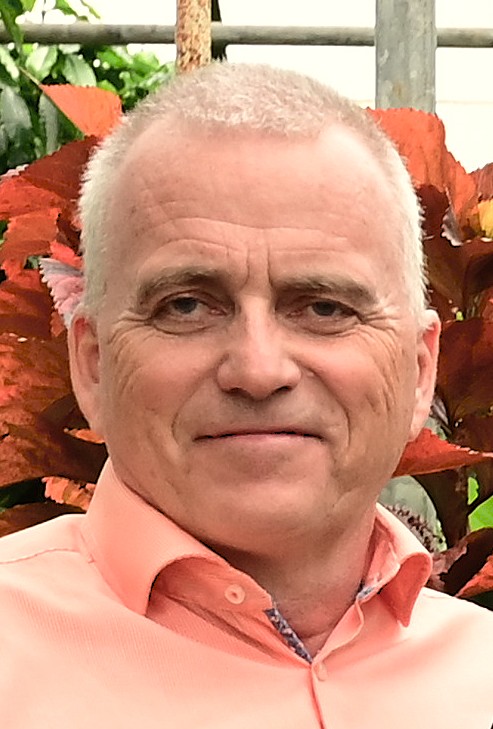
Sveinn Aðalsteinsson, CEO of Orkídea
Orkídea is an innovation and development cooperation organisation operating in southern Iceland, focusing on sustainable food production, biotechnology, renewable energy and circular economy solutions.
Kristinestad is a coastal town with a population of around 6,100 on Finland’s west coast. Its economic structure is based primarily on agriculture and the food industry, and fishing has been an important part of the region’s livelihood for centuries. Plans are also currently underway to build a biogas plant in the area.
The KristinaEco Living Lab provides a collaborative environment in which entrepreneurs in the agricultural, forestry and fisheries sectors, researchers and processing companies can develop new business opportunities from production by-products. These include, for example, vegetable tops, forestry residues and by-products from fish processing.
PROJECT DETAILS
Project name:
From salmon sludge and manure to fertiliser: a circular economy around land- based salmon farming
Funding:
This project has received funding from the European Community’s LIFE program under grant agreement Nr. 101113811
Funding scheme:
Standard Action Project (SAP)